Africa’s fintech innovations, including Ghana’s digital onboarding, Nigeria’s collaborative fintech ecosystem, and Kenya’s mobile money success, show how accessibility-first financial systems can dramatically expand financial inclusion and economic opportunity.
Universities like Bowie State University are becoming key testing grounds for inclusive digital finance, where students with lived experience of financial exclusion help design more equitable systems. Its partnership with the Interledger Foundation shows how education and community engagement can shape the future of accessible financial infrastructure.
Africa’s payment systems struggle not because of missing technology but because of flawed business models and commercial design. To achieve adoption, systems must prioritize free P2P transfers, better accessibility, and simple proxy-based addressing, alongside regulatory reforms that overcome incumbent resistance.
The internet isn’t truly free: we “pay” with our time, attention, and data, which fuel platforms designed to capture and manipulate us. Alternatives like Web Monetization aim to restore privacy, fairness, and control by letting users directly support creators.
As we come to the end of the year and review the past 2 months, we see that we have continued to make a significant impact in helping to close the financial exclusion gap worldwide. The surge in digital financial services is a major enabler as we continue to adopt services such as mobile banking, mobile money accounts, internet banking, and digital payments. Many have called this period a breakthrough moment for financial inclusion.
ILF Ambassador Gavin Chait envisions a federated, community-led e-commerce model through Hop Sauna that empowers creators with autonomy, inclusivity, and interoperable payments—reimagining online commerce and social media as decentralized and equitable spaces.
Interledger Ambassador Caroline Sinders warns that harmful or manipulative design patterns in digital finance can exploit vulnerable users and undermine trust, calling for transparent, user-centered, and inclusive design standards to ensure ethical financial technology.
The article highlights how friction in design can harm users when misused but also enhance safety, consent, and reflection when applied thoughtfully. Used well, it becomes a valuable tool for protecting user agency and trust, especially in financial and sensitive digital products.
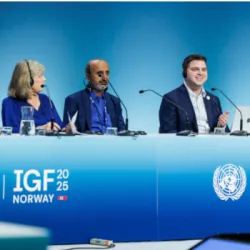
At the 2025 UN Internet Governance Forum, the Interledger Foundation helped launch a Policy Blueprint advocating for open, interoperable, and inclusive digital payment systems.